
The 3,300-Year-Old Shipwreck Hidden Inside Bodrum Castle
Short answer: in 1982 a sponge diver from Yalıkavak mentioned some "metal biscuits with ears" lying on the seabed. They turned out to be Bronze Age copper ingots, and the ship they came from — sunk around 1300 BC — is now the most valuable single archaeological find ever raised from the Mediterranean. It is on display inside Bodrum Castle.
Most people visit the castle for the castle. They leave talking about the shipwreck.
The sponge diver who noticed
Bodrum's sponge divers spent generations on this seabed and knew it better than any chart. In 1982, Mehmed Çakır, diving off a headland called Uluburun near Kaş, described objects on the bottom that looked like flattened metal slabs with handles at the corners.
He was describing an oxhide ingot — the standard copper trading unit of the Late Bronze Age, shaped so a man could carry it on his shoulder. The report reached the Institute of Nautical Archaeology, based in Bodrum, and a survey dive confirmed what nobody expected: an intact merchant cargo, undisturbed, at a depth that had kept looters away for over three thousand years.
Eleven years, twenty-two thousand dives
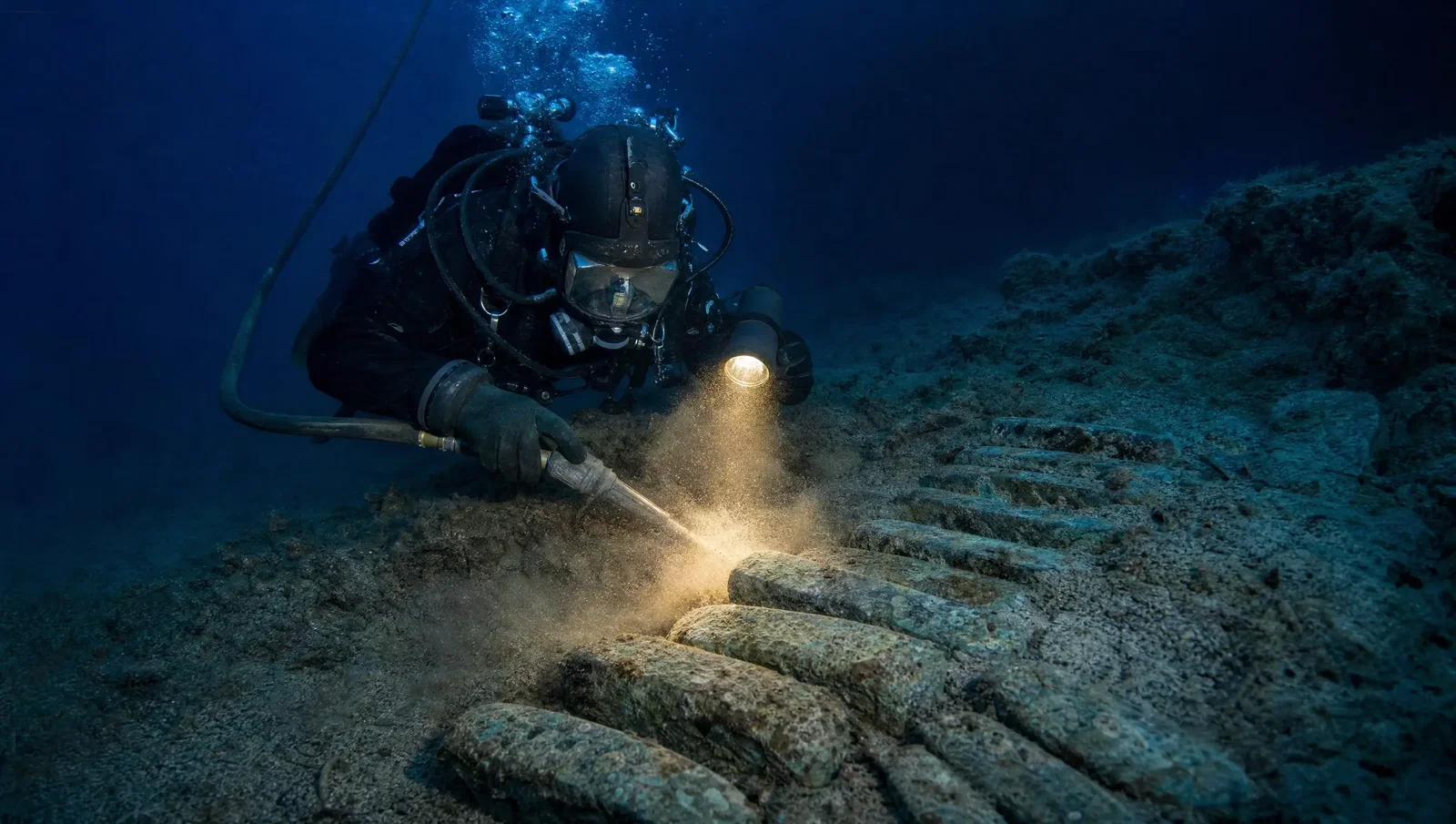
Excavating it took from 1984 to 1994. The wreck lay on a steep slope at roughly 44 to 61 metres — deep enough that divers could only work in short bursts, several times a day, for a decade. Around 22,000 individual dives were logged.
Everything was mapped in place before it was lifted. That discipline is the reason the wreck matters so much: this is not a pile of salvaged treasure, it is a complete commercial cargo with its stowage recorded, which is as close as archaeology gets to a photograph of Bronze Age trade in motion.
What was on board
Roughly twenty tonnes of cargo, drawn from an area stretching from the Baltic to sub-Saharan Africa:
- Around ten tonnes of copper in oxhide and bun ingots — several hundred of them, mostly Cypriot.
- Tin ingots in almost exactly the proportion needed to alloy that copper into bronze. The ship was, in effect, carrying a bronze industry in kit form.
- Cobalt-blue, turquoise and lavender glass ingots — the earliest intact raw glass ingots known.
- Canaanite jars holding terebinth resin, used as incense and in perfume.
- Ebony-like African blackwood, elephant tusks and hippopotamus teeth, raw material for luxury carving.
- Baltic amber, which had crossed most of a continent overland before it was loaded.
- Ostrich eggshells, tortoiseshell, gold and silver jewellery, weapons, tools, weights, and the crew's own possessions.
Materials from Egypt, Cyprus, Canaan, Mycenaean Greece, Assyria, Nubia, Sicily and the Baltic were sitting in one hull. Before Uluburun, the scale of that network was argued about. After it, it was a manifest.
The scarab that dates a queen
Among the small finds was a gold scarab inscribed with the name of Nefertiti — the only such object known. Being gold, it was probably already an heirloom when the ship went down, and it is one of the anchors used to place the wreck in the late 14th century BC.
It is the size of a thumbnail. It travels well in the memory.
Why a wreck from Kaş is displayed in Bodrum
A reasonable question, since Uluburun is roughly 200 kilometres east along the coast. The answer is that the excavation was run by the Institute of Nautical Archaeology, whose Turkish base has been in Bodrum Castle since the 1960s, and the castle became the country's — and arguably the world's — dedicated museum of underwater archaeology.
Practically, it means one ticket in central Bodrum puts you in front of finds recovered from wrecks all along this coast.
Three more things in the same building
The Glass Wreck
An 11th-century AD ship that sank at Serçe Limanı carrying three tonnes of broken glass — cullet, being shipped for recycling. Conservators reassembled thousands of vessels from it, and the hall is a startling record of medieval trade and, incidentally, of recycling as a thousand-year-old industry.
The Carian Princess
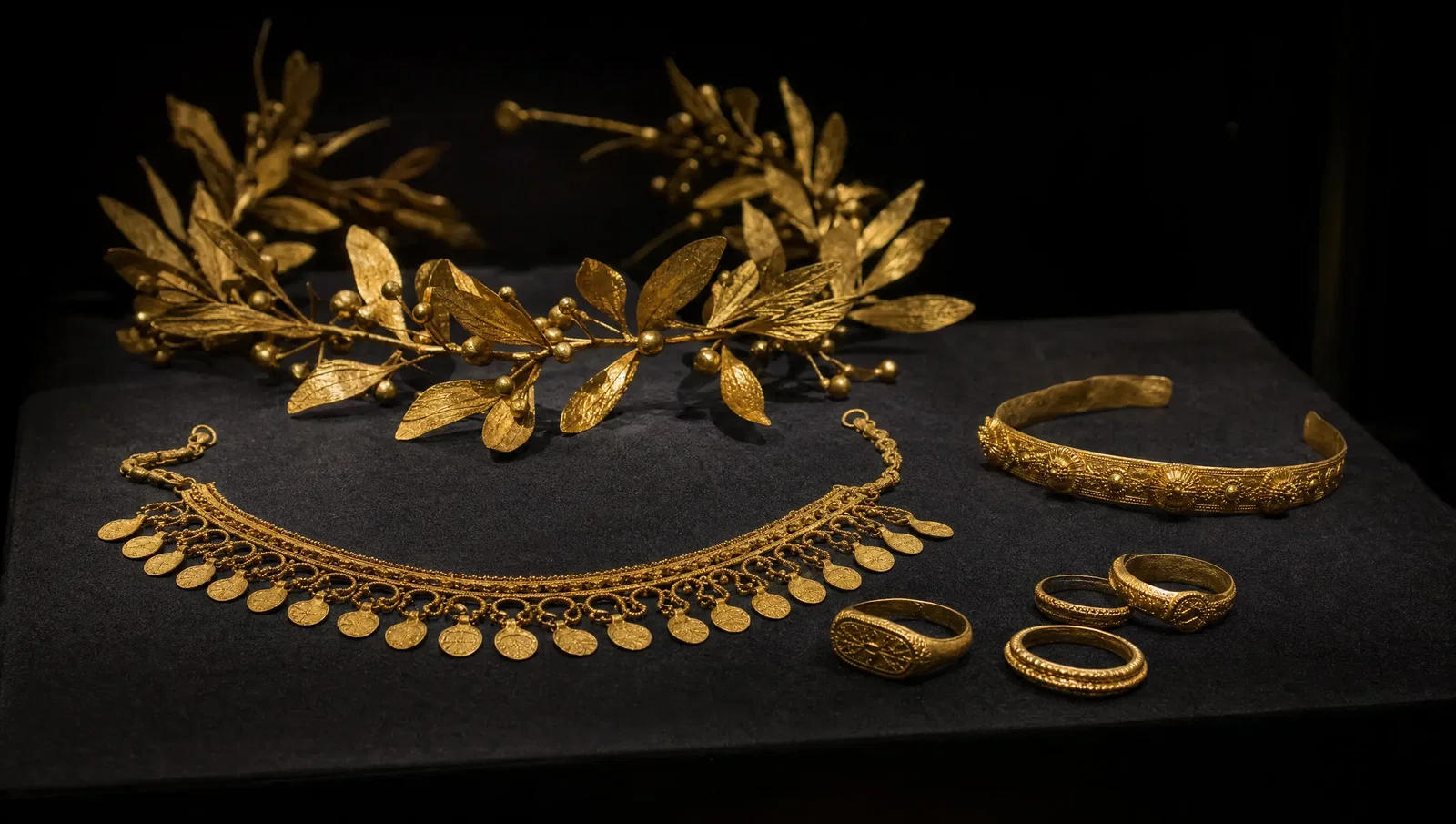
In 1989 a burial chamber was found during construction work in Bodrum. Inside lay a woman of about forty, buried in the 4th century BC with a gold crown, necklaces, rings and a wreath of gold myrtle. Her skull was taken to Manchester for forensic facial reconstruction, and the resulting face resembled marble portraits associated with Ada of Caria — the sister of Mausolus, the queen who adopted Alexander the Great as her son. The identification is not certain. Standing in front of her is unforgettable regardless.
The amphora halls
Row after row of transport jars, sorted by period and origin. It looks decorative until you realise you are reading a chronology of who was shipping what, and to whom, for two thousand years.
How to visit well
Do the shipwreck halls first. Most visitors walk the ramparts, run out of energy and skim the exhibitions. Reverse it: go straight to Uluburun while you are fresh, then walk the walls on the way out.
Read the reconstruction. The display includes a full-scale reconstruction of a section of the hull with the cargo stowed as it was found. It is the single best thing in the museum and it is easy to walk past.
Budget two to three hours for the museum and castle together, and go at opening time in July and August.
Bring water and real shoes — the exhibitions are spread between towers, with stairs and open terraces in between.
Frequently asked questions
How old is the Uluburun shipwreck?
It sank around 1300 BC — the late 14th century BC — making it one of the oldest known seagoing shipwrecks anywhere and the oldest with an intact cargo of this scale.
Where can I see the Uluburun shipwreck?
In the Bodrum Museum of Underwater Archaeology, inside Bodrum Castle on the harbour in central Bodrum. The wreck was found off Uluburun near Kaş, but the finds and the reconstruction are displayed here.
Can you dive the Uluburun wreck site?
No. The site was fully excavated between 1984 and 1994 and lies at 44–61 metres, beyond recreational limits. Bodrum has excellent recreational diving elsewhere on the peninsula, including reefs, walls and a wreck or two at sensible depths.
What was found on the Uluburun ship?
Around twenty tonnes of cargo: ten tonnes of copper ingots, tin, raw glass ingots, resin in Canaanite jars, ebony-like blackwood, ivory, Baltic amber, ostrich eggshells, gold and silver jewellery — and a gold scarab bearing the name of Nefertiti.
Is the museum suitable for children?
Yes. It is a castle containing sunken treasure, which is a fairly strong offer. Younger children tend to prefer the ramparts, the dungeons and the peacocks; ten and up usually get caught by the shipwreck itself.
Making a day of it
The castle sits between Bodrum's two bays, five minutes from the fish market and ten from the Mausoleum site. A good version of this day is: museum at opening, late lunch on the water, and an afternoon on a boat looking at the same coastline the Uluburun crew were sailing.
We arrange the whole sequence — timings, guide, car, table and boat — as one plan with one point of contact. Tell us your dates, or browse the Bodrum Guide for what else is worth your morning.
More Bodrum reading
- Bodrum Castle: the crusader fortress built from a Wonder
- Where did the Mausoleum of Halicarnassus actually go?
- Gümüşlük’s sunken city: walk an ancient road into the sea
- The night that starts on a boat: Bodrum nightlife by sea
Museum in the morning, water in the afternoon.
The shipwreck halls at opening time, lunch on the harbour, and an afternoon on the same coastline the Uluburun crew were sailing. We time it, book it and drive it.
Message us on WhatsApp — the fastest way to reach us, day or night. Prefer email or a form? Send us your dates and we will come back with a plan and a price.
More from the site: Excursions · Day Boats & Speedboats · Activities & Experiences · Bodrum Guide
Images on this page are illustrative.