
Gumusluk's Sunken City: Walk an Ancient Road Into the Sea
Short answer: at Gümüşlük, on the western tip of the Bodrum peninsula, an ancient city sank into the bay. Its harbour wall is still there, a metre or so under the surface, and you can wade along the top of it from the beach to Rabbit Island. It is the only place in Bodrum where you can walk on a road built before the Roman Empire and get your knees wet doing it.
It is also the reason Gümüşlük looks nothing like the rest of the coast — and that story is better than the walk.
What is under the water
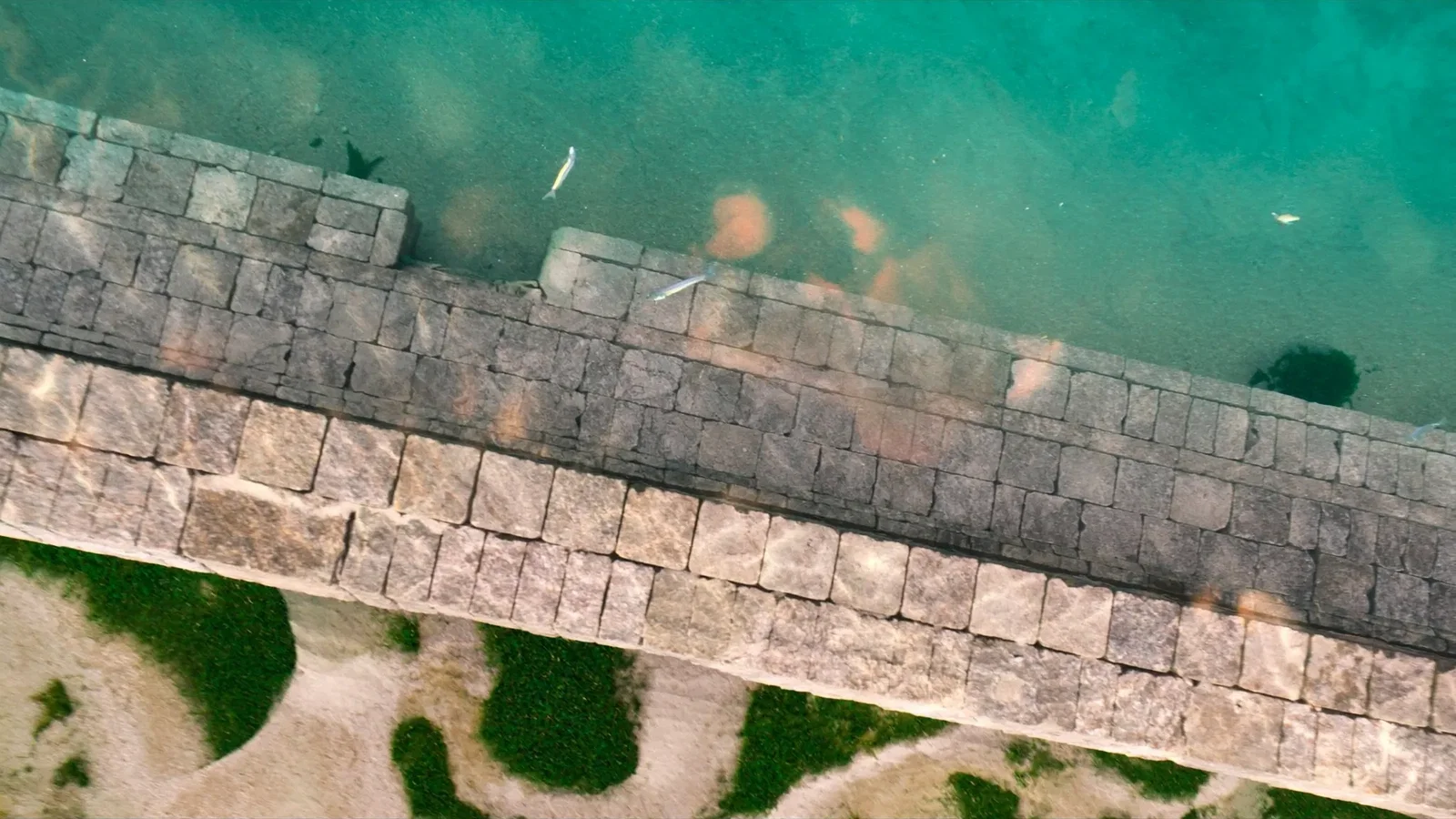
The village sits on top of Myndos, a Carian city that Mausolus developed in the 4th century BC as part of the same building programme that produced Halicarnassus and its Mausoleum. Myndos had walls, a harbour, a theatre and a fortified acropolis.
Over the centuries the coastline dropped. Earthquakes and slow subsidence took the harbour works down with it, and today the outline of the ancient port is visible from the shore on a calm day as pale geometry under blue water: block courses, a mole running out into the bay, the corners of structures that are unmistakably not natural rock.
Swim out with a mask in the morning, before the wind gets up, and you can follow the walls. It is shallow, clear and genuinely strange — snorkelling over a street plan.
Rabbit Island and the road that goes into the sea
The small island closing the bay is Tavşan Adası — Rabbit Island — and there really were rabbits. Connecting it to the shore is a submerged causeway, part of the ancient harbour works, sitting just below the waterline.
In calm conditions you can walk it. The water is generally between knee and thigh deep, the stones are uneven and slick with weed, and it takes ten to fifteen minutes at a sensible pace. On the island there are foundations, cisterns and one of the best views on the peninsula back towards the mainland.
Practical notes, because people get this wrong:
- Wear water shoes. Not flip-flops, not bare feet. Sea urchins, sharp stone, slippery weed.
- Go when it is flat. Afternoon wind on this side of the peninsula pushes chop across the causeway, and the crossing goes from pleasant to unpleasant quickly.
- Carry your things above the water, phones included. A dry bag is not overkill.
- Take nothing off the seabed. This is a protected archaeological site, and removing antiquities — including stones and pottery fragments — is a criminal offence in Türkiye, not a souvenir policy.
Alexander the Great tried this bay and lost
In 334 BC Alexander was besieging Halicarnassus and decided to take Myndos as well, on the promise of the city being handed to him from within. He brought a force round by night.
The betrayal never materialised, the gates stayed shut, and the defenders — reinforced by sea from Halicarnassus — beat off the attack. Arrian records that Alexander, having brought no siege engines, withdrew and went back to the main siege.
The man who took Persia was turned away from the bay where you are now deciding between grilled octopus and sea bass.
Why Gümüşlük has no concrete
Here is the part that changes how the place looks to you.
Because the ruins of Myndos lie under and around the village, the whole area is a designated archaeological conservation site. Building is tightly restricted. That single planning constraint is why Gümüşlük has no high-rise hotels, no marina, no apartment blocks — just low stone houses, tables set out on the sand and boats pulled up on the shingle.
The village's low-key charm is not a style choice or a rustic revival. It is a two-and-a-half-thousand-year-old city protecting the place that sits on it.
What else to see on land
- The acropolis path above the village — walls and terracing, and the whole bay laid out below. Go at the end of the day, not the middle.
- The ancient quarry cuts along the shoreline: straight-sided notches in the rock where blocks were levered out.
- Koyunbaba, the next bay north — quieter, with a pebble beach.
- The sunset. Gümüşlük faces west, and the sun drops behind Rabbit Island. It is the single most reliable sunset on the peninsula and the reason to book dinner for around an hour beforehand.
Dinner on the water
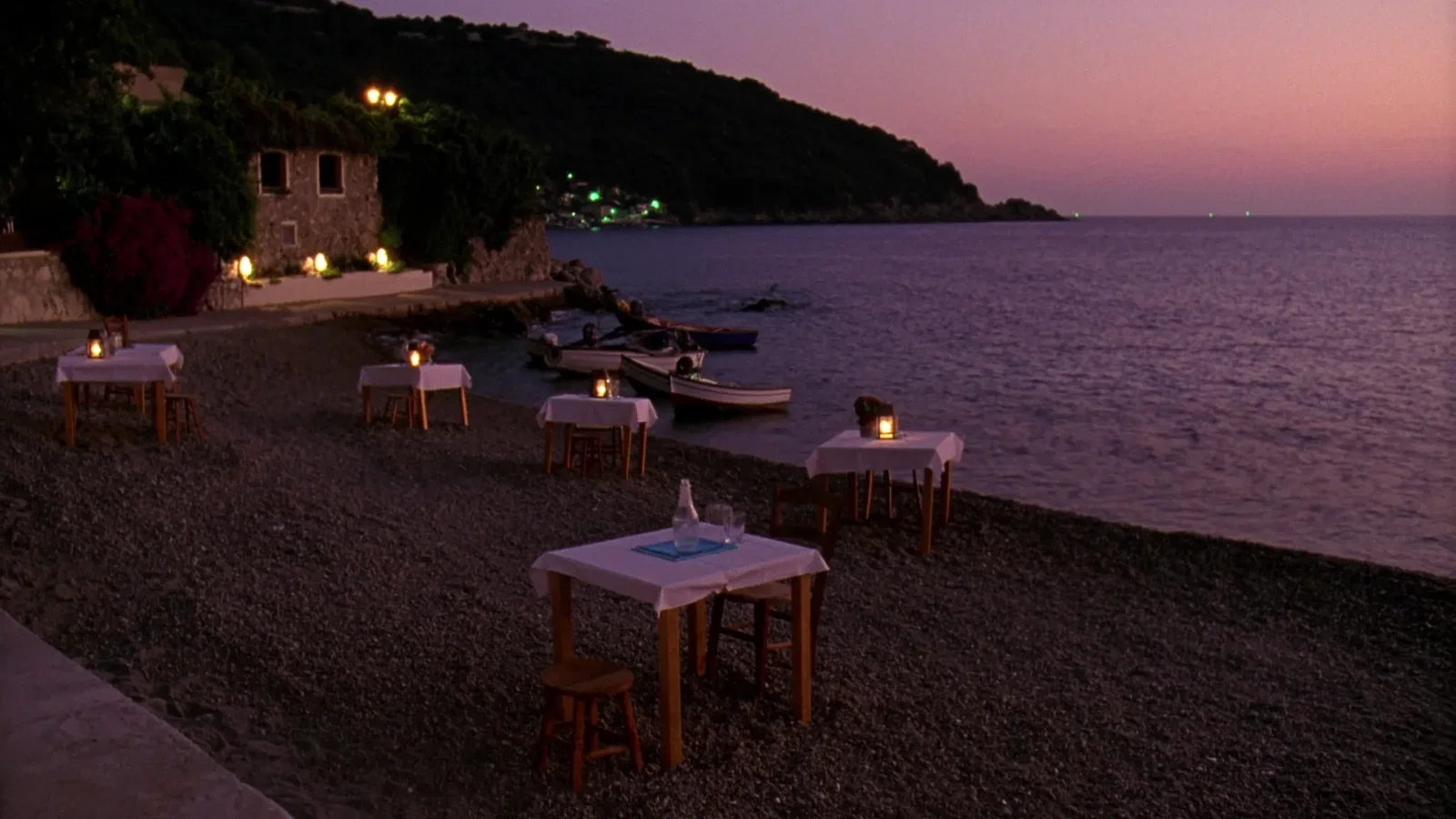
Gümüşlük's seafront is a row of fish restaurants with tables set almost in the water. It is the traditional last-night dinner of a Bodrum trip: meze brought to the table on a tray, whatever came in that morning, and the light going pink over the island.
Book ahead in July and August, and ask specifically for a front-row table — the difference between the first row and the third is the entire point. Our guide to where to eat in Bodrum covers the peninsula's kitchens, including the ones out here that do not take online bookings.
Getting there
Gümüşlük is roughly 25 kilometres west of Bodrum town — 35 to 45 minutes by road depending on season and traffic. The last stretch into the village is narrow and parking is restricted at the seafront in summer, which catches out most first-time drivers.
Two better options:
- Arrive by sea. Many day charters finish at Gümüşlük and drop guests straight onto the beach for dinner. It is the best possible arrival, and it removes the parking problem entirely. See day boats and speedboats.
- Be driven. A private transfer means the sunset rakı is not a mathematical problem, and the car is waiting where you left the table.
Frequently asked questions
Can you really walk to Rabbit Island in Gümüşlük?
Yes, along a submerged ancient causeway from the beach, in water usually between knee and thigh deep. It takes ten to fifteen minutes, needs calm conditions, and water shoes are essential.
What is the sunken city at Gümüşlük?
The harbour works and walls of ancient Myndos, a Carian city developed in the 4th century BC. Subsidence and earthquakes put the port under water; the masonry is visible from the surface on a calm day and easy to snorkel over.
Is Gümüşlük good for swimming?
Yes — the bay is shallow, sheltered and calm in the morning. Wear water shoes near the ruins, and keep clear of moored boats and the causeway route when there is traffic.
When is the best time to visit Gümüşlük?
Late afternoon into evening: the light is best, the wind drops, the causeway is at its calmest and the sunset is the main event. May, June and September are the pleasantest months. Midday in August is hot and busy.
How far is Gümüşlük from Bodrum town and the airport?
About 25 km from Bodrum town (35–45 minutes) and roughly 55 km from Bodrum–Milas Airport (around an hour), depending on season.
An evening in Gümüşlük, arranged
The version of this we build most often: a boat west along the peninsula in the afternoon, an hour swimming over the ruins, ashore in time for the light, a front table held on the water and a car waiting afterwards. One plan, one contact, no parking.
Tell us your dates and we will put it together — or read the rest of our Bodrum Guide, including Bodrum Castle and the lost Mausoleum of Halicarnassus, for the wider picture of what is worth your time here.
More Bodrum reading
- Where did the Mausoleum of Halicarnassus actually go?
- Bodrum Castle: the crusader fortress built from a Wonder
- The 3,300-year-old shipwreck hidden inside Bodrum Castle
- The night that starts on a boat: Bodrum nightlife by sea
An evening in Gümüşlük, arranged.
A boat west in the afternoon, an hour swimming over the ruins, ashore in time for the light, a front-row table held on the water and a car waiting afterwards. No parking, no timing anxiety.
Message us on WhatsApp — the fastest way to reach us, day or night. Prefer email or a form? Send us your dates and we will come back with a plan and a price.
More from the site: Day Boats & Speedboats · Restaurants · Private Transfers · Bodrum Guide
Images on this page are illustrative.