
Bodrum Castle: The Crusader Fortress Built From a Wonder
Short answer: Bodrum Castle was built by a crusader order out of the rubble of a Wonder of the Ancient World, held for 121 years, surrendered without a shot, spent part of the 20th century as a prison, and now houses the finest underwater archaeology collection in the world. Very few buildings have had a stranger career.
It is also the thing you see first. Fly into Bodrum, come in by boat, or walk out of any bar on the harbour front, and the castle is there — a low grey crown between the two bays. Most people photograph it and move on. Here is what you are actually looking at.
Quick facts
- Built from: 1402 onwards, by the Knights Hospitaller (the Knights of St John)
- Original name: the Castle of St Peter — Petronium, which is where the name "Bodrum" comes from
- Building material: largely the fallen Mausoleum of Halicarnassus
- Fell to the Ottomans: 1523, by surrender rather than siege
- Today: the Bodrum Museum of Underwater Archaeology
- Time needed: two to three hours, and that is not generous
Why a crusader castle is standing in Türkiye
In 1402 the Ottoman sultan Bayezid I was defeated and captured by Timur at the Battle of Ankara. The Ottoman state collapsed into a decade of civil war — and the Knights of St John, based on Rhodes, took the opening.
They landed on the mainland opposite their island, on the site of the ancient Halicarnassus harbour, and started building. The fortress they raised was the order's forward position on the Anatolian coast: a place of refuge for Christians escaping the mainland, and a very deliberate statement planted where everybody sailing the Aegean would see it.
They named it for St Peter. Local Turkish speakers turned Petronium into Bodrum, and the castle ended up naming the town.
The towers are a map of medieval Europe
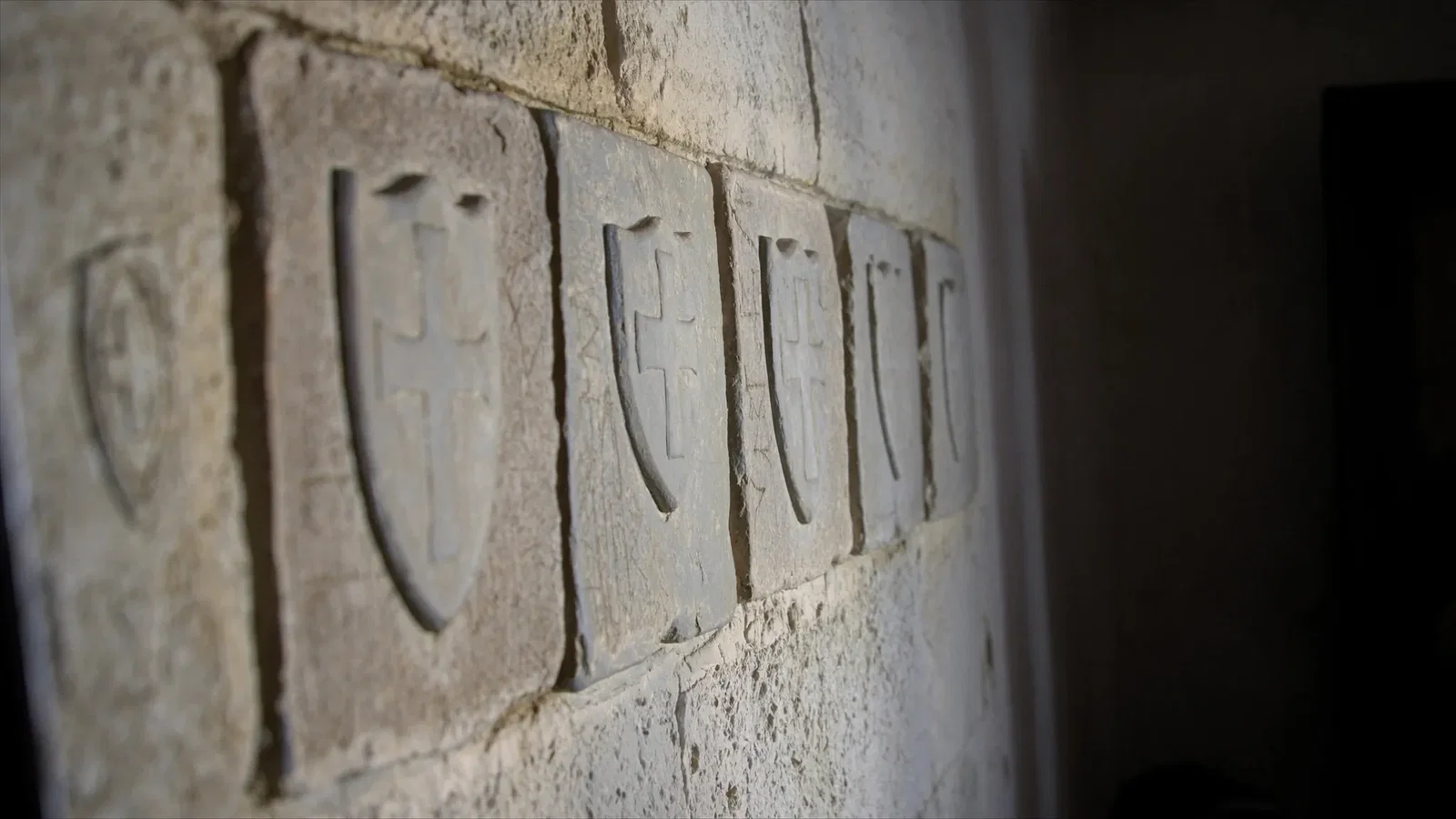
The Hospitallers were organised into langues — national tongues, each with its own knights, its own money and its own pride. When it came to building, each langue was given a tower and told to get on with it.
That is why the towers carry the names of nations: the English Tower, the French Tower, the German Tower, the Italian Tower, and the tower usually called the Spanish or Snake Tower. Five building crews, five budgets, five sets of masons, one castle. Look closely and the stonework changes as you move between them.
The English Tower — sometimes called the Lion Tower — is the one to spend time in. Completed around 1413, its walls carry coats of arms and, more affectingly, graffiti: names, crests and dates cut into the stone by knights who were stationed here six hundred years ago and wanted somebody to know it. It is the closest thing the castle has to a comments section.
The wall itself is an archaeological site
Walk the curtain walls and start reading the masonry rather than the view. Set into it you will find fluted column drums lying on their sides, blocks of green volcanic stone from earlier structures, fragments of carved marble facing the wrong way — building material scavenged from a collapsed Wonder and from the ruins of ancient Halicarnassus around it.
The knights also embedded carved relief panels from the Mausoleum into the castle as decoration. Those particular panels were removed to the British Museum in the 1850s, but the habit is visible everywhere: this is a fortress made of an older city.
How the castle fell without a fight
In 1522 Suleiman the Magnificent laid siege to Rhodes with an army the Hospitallers could not match. Rhodes surrendered that December, and the terms allowed the knights to leave the eastern Mediterranean with their arms and their relics.
That settlement included their mainland outposts. In 1523 the garrison at St Peter's simply handed over the keys, sailed away, and eventually settled on Malta — where they became the Knights of Malta and built the fortifications of Valletta with everything they had learned here.
The castle chapel became a mosque, a minaret went up, and the fortress served the Ottoman navy instead. Its walls never had to be broken, which is exactly why so much of the medieval fabric survives to be walked on today.
The 20th century: a prison with a view
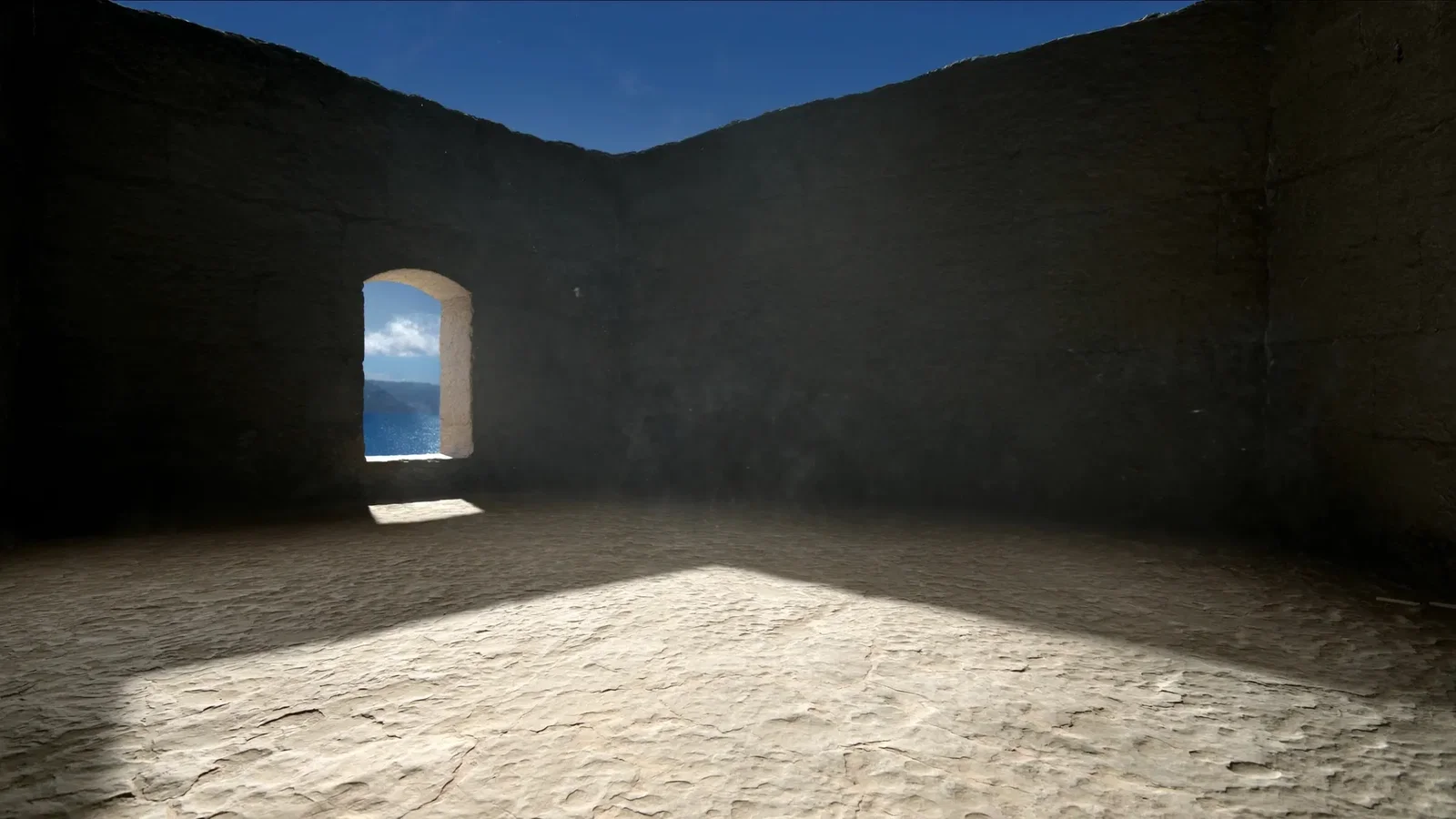
The strangest chapter is the most recent. In the early Republican period the castle was used as a prison — and in 1925 the writer Cevat Şakir Kabaağaçlı was exiled to Bodrum, then a forgotten fishing town of sponge divers and boatbuilders.
He stayed. Writing as Halikarnas Balıkçısı — the Fisherman of Halicarnassus — he spent decades describing this coast so well that he is a large part of the reason the world came looking for it. A man sent to Bodrum as a punishment invented Bodrum as a destination.
The castle became a museum in 1964.
What is inside now
The Bodrum Museum of Underwater Archaeology occupies the towers, halls and chapel, and it is a serious institution rather than a castle with a few display cases. Among its holdings:
- The Uluburun shipwreck — a merchant ship that sank around 1300 BC, with a cargo drawn from across the Bronze Age world. We have written about it separately, because it deserves its own piece.
- The Glass Wreck from Serçe Limanı, an 11th-century AD ship carrying three tonnes of broken glass for recycling — painstakingly reassembled.
- The Carian Princess: a 4th-century BC noblewoman found in Bodrum in 1989, buried in gold, with a forensic facial reconstruction that has been linked to Queen Ada of Caria.
- Amphora halls, coin and jewellery collections, and the chapel, the dungeons and the ramparts themselves.
How to visit well
Allow two to three hours. People routinely give the castle 45 minutes because it looks compact from the harbour. It is not: the exhibitions are spread across separate towers and terraces, with climbing between them.
Wear real shoes. Cobbles, worn stone stairs, steep ramps and no handrail in places. This is a working medieval fortress, not a museum floor.
Go early. Cruise groups arrive mid-morning in season and the towers are narrow. Opening time is quiet, cool, and the light on the harbour is at its best.
Do the Mausoleum first. Half an hour uphill at the Mausoleum site transforms the castle walls from nice masonry into something you can read.
Check the day's hours. Summer and winter schedules differ and individual halls occasionally close for conservation.
Frequently asked questions
How long do you need at Bodrum Castle?
Two to three hours for the castle and the museum together. If you only have an hour, prioritise the English Tower, the ramparts and the Uluburun hall.
Is Bodrum Castle suitable for children?
Very — it is a real castle with towers, dungeons, a shipwreck and peacocks in the gardens. Watch the stairs and the unfenced edges with small children.
Who built Bodrum Castle and when?
The Knights Hospitaller (Knights of St John) began construction in 1402 and continued for over a century, using stone from the collapsed Mausoleum of Halicarnassus. It passed to the Ottomans in 1523.
Why is it called the Castle of St Peter?
The knights dedicated it to St Peter and called it Petronium. The Turkish name Bodrum derives from that word — the castle named the town, not the other way round.
Can you visit the castle in the evening?
The museum keeps daytime hours, but the castle is floodlit after dark and the walk around its base along the harbour is one of the best evening walks in town — easy to combine with dinner on either bay.
Seeing the castle with Vega
The castle is a ten-minute walk from most of the old town, but the day around it is what we build: the right start time, a guide who knows which halls are open, a car waiting when the heat arrives, and a table held on the far bay for the evening. See our private excursions, or simply tell us your dates and we will design the day around them.
More Bodrum reading
- Where did the Mausoleum of Halicarnassus actually go?
- The 3,300-year-old shipwreck hidden inside Bodrum Castle
- Gümüşlük’s sunken city: walk an ancient road into the sea
- Bodrum after dark: the hour-by-hour guide to a perfect night
See the castle properly, then eat well.
Opening time at the castle before the crowds, the Mausoleum first so the walls make sense, and a table held on the far bay for the evening. One plan, one point of contact.
Message us on WhatsApp — the fastest way to reach us, day or night. Prefer email or a form? Send us your dates and we will come back with a plan and a price.
More from the site: Excursions · Restaurants · Private Transfers · Bodrum Guide
Images on this page are illustrative.